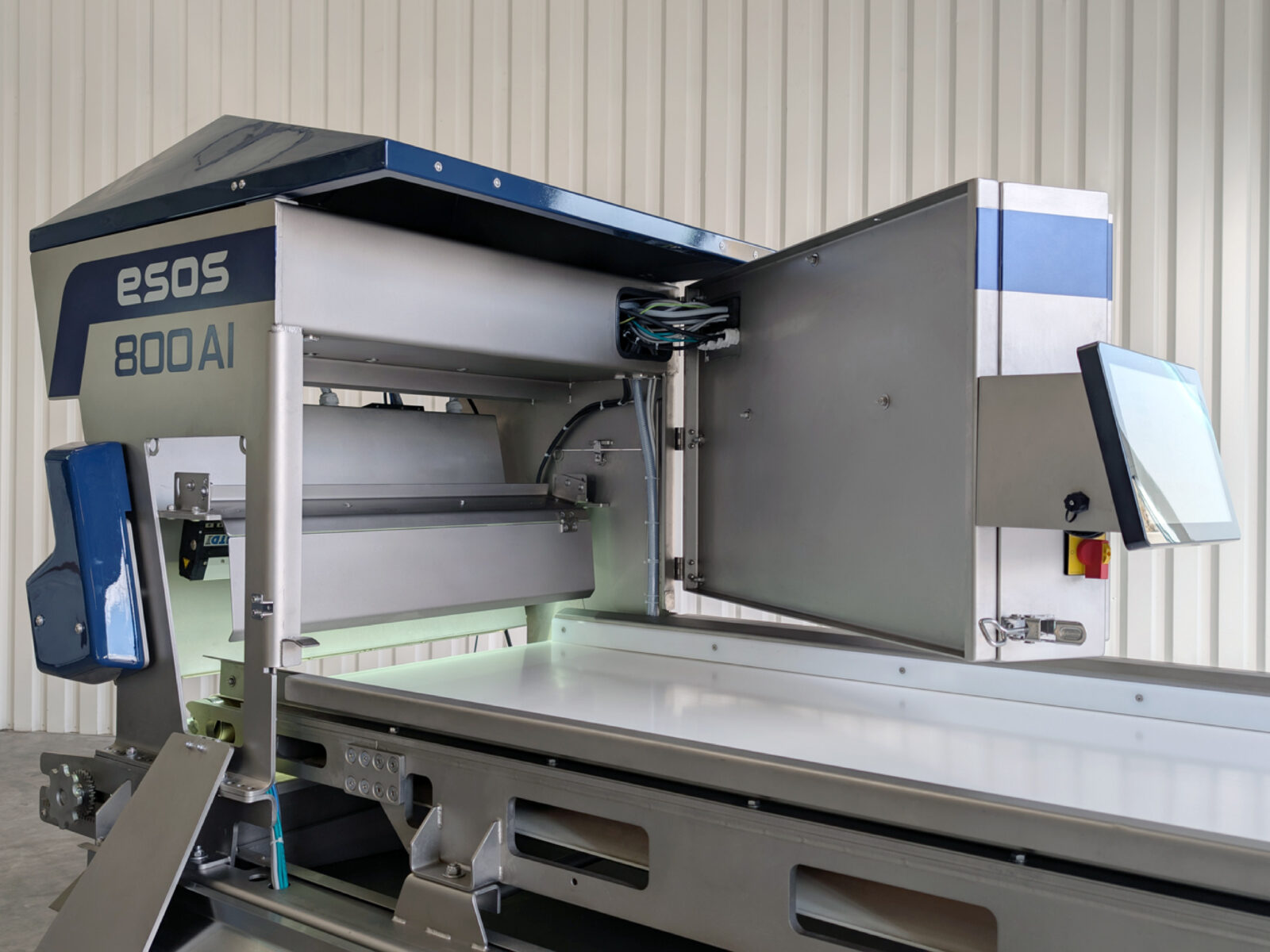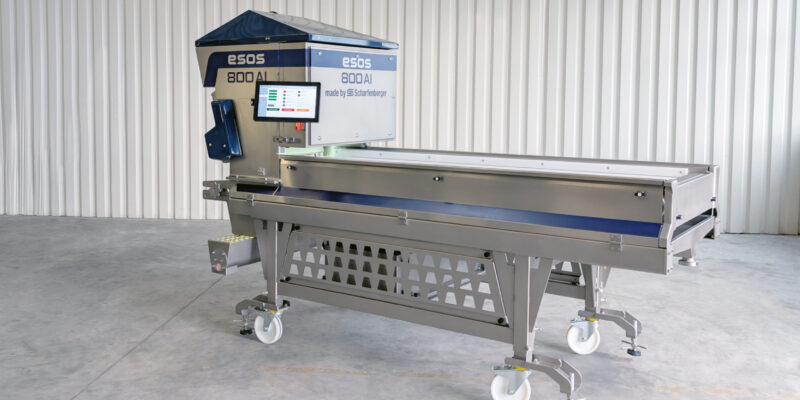
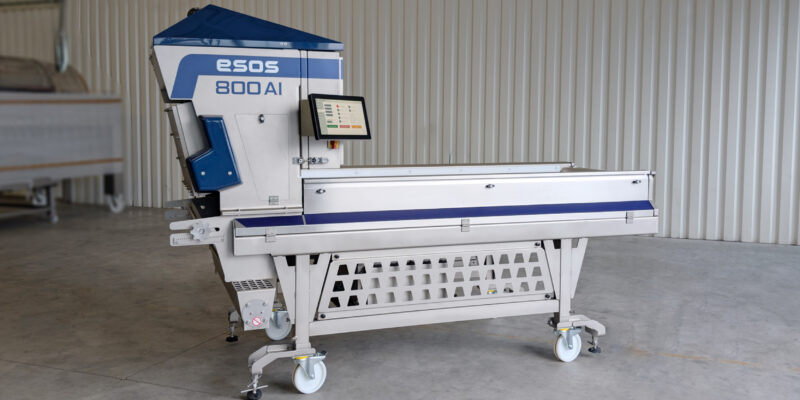
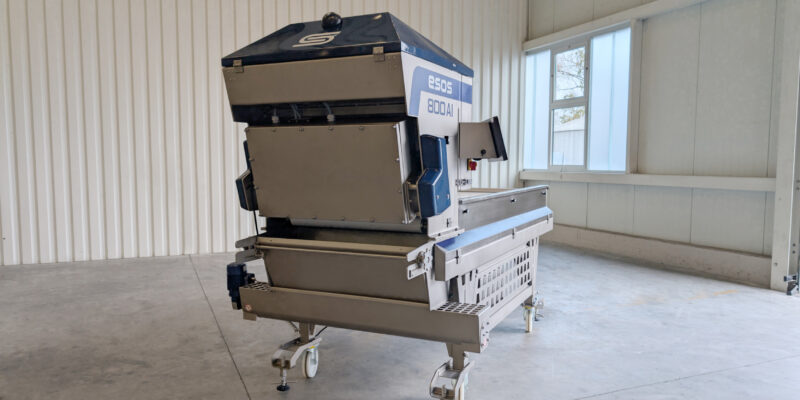
Optical sorting machine ESOS AI – Sorting precision that sets new standards.
Equipment:
- frame in stainless steel
- 4 directional wheels
- belt made out of food-grade material
- belt with adjustable speed
- inspection openings for easy access and fast cleaning
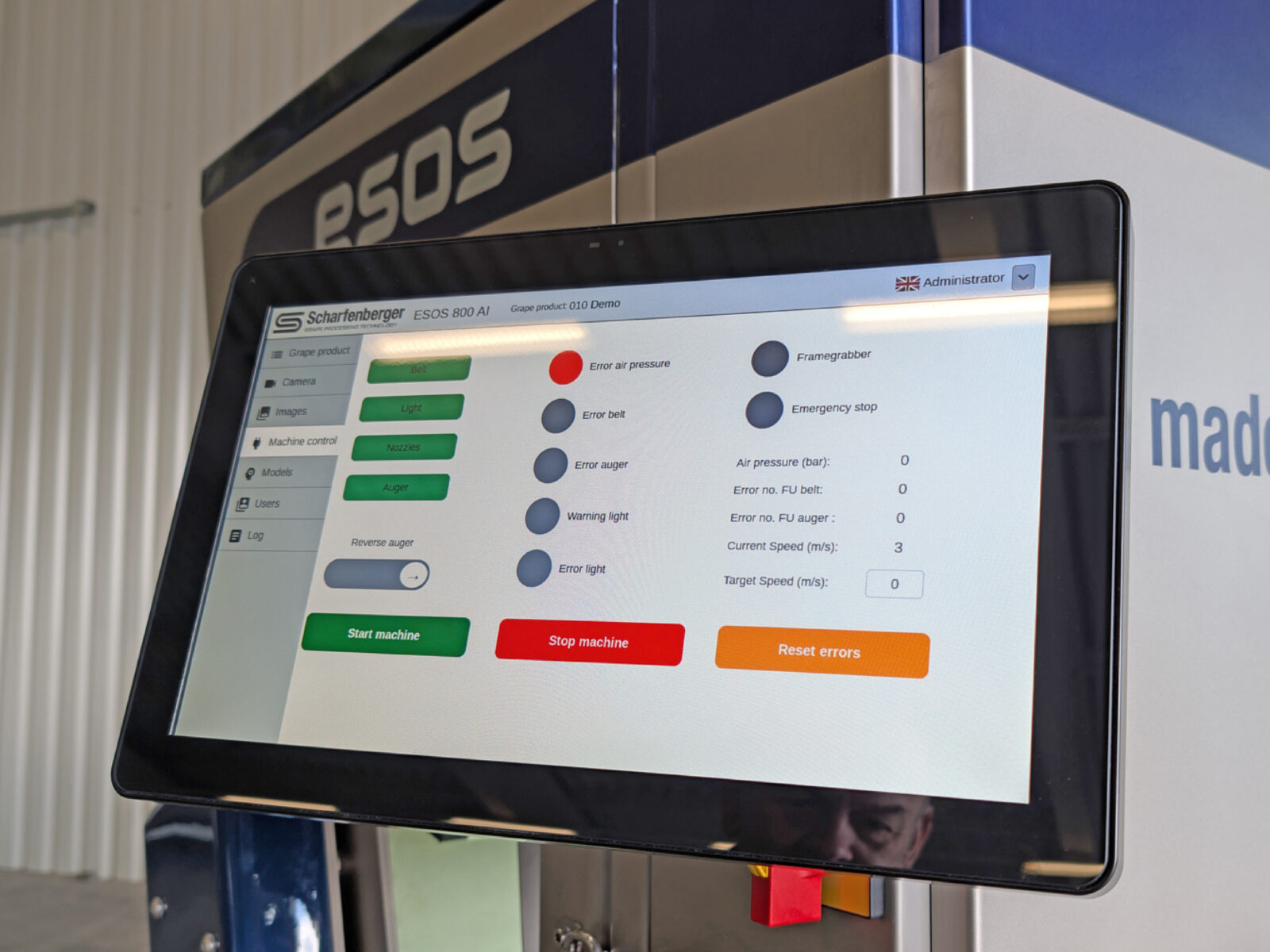
- large 15″ LCD Touchscreen
- delivered incl. diverse training moduls
Scope of application:
- sorting of grapes, berries, nuts and legumes
Options
- discharge auger for discharge of the sorted objects
- additional fixed feet
- extendable underframe up to 350mm
- different height upon request
Technical Data:
- capacity approx. 8-15 t/h (depends on grape quality)
- belt width: 800 mm
- belt length: 2500 mm
- belt velocity 3 m/s
- 160 individual nozzles
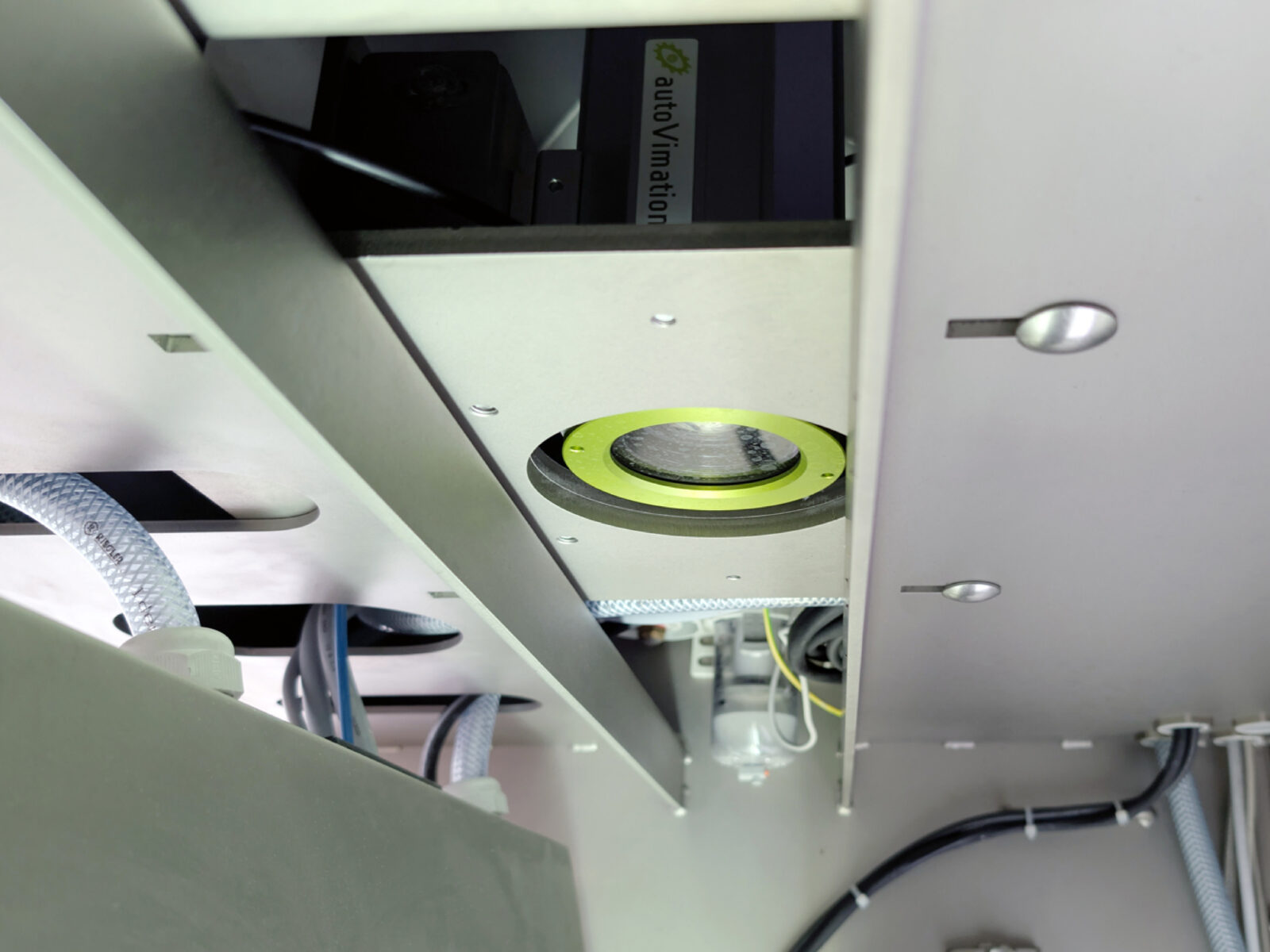
- camera system: 4K line scan camera
- AI processing time max. 0,4 ms
- at 1,400 objects per second, approx. 23 MB/s of image data are processed
Artificial Intelligence in operation.
How the AI works:
While conventional systems typically capture only red, green, and blue color values and quickly reach their limits with similar shades, the ESOS AI analyzes each object holistically – from shape and structure to surface characteristics. This allows it to reliably distinguish between ripe, unripe, or spoiled berries, stems, and other foreign materials. The AI reacts intelligently to natural variations, such as differences between harvests or variations among individual objects. This ensures sorting quality that is precise, reproducible, and reliable. The key advantage: The user can easily define which features are evaluated.
- independent of variety | independent of ripeness | highly precise
AI Training and Optimization:
The machine is delivered with various standard training models for the most common grape varieties. On the machine itself, training models can be created or further trained. Within a training module, up to 20 different characteristics can be processed.
Real-Time Analysis powered by AI:
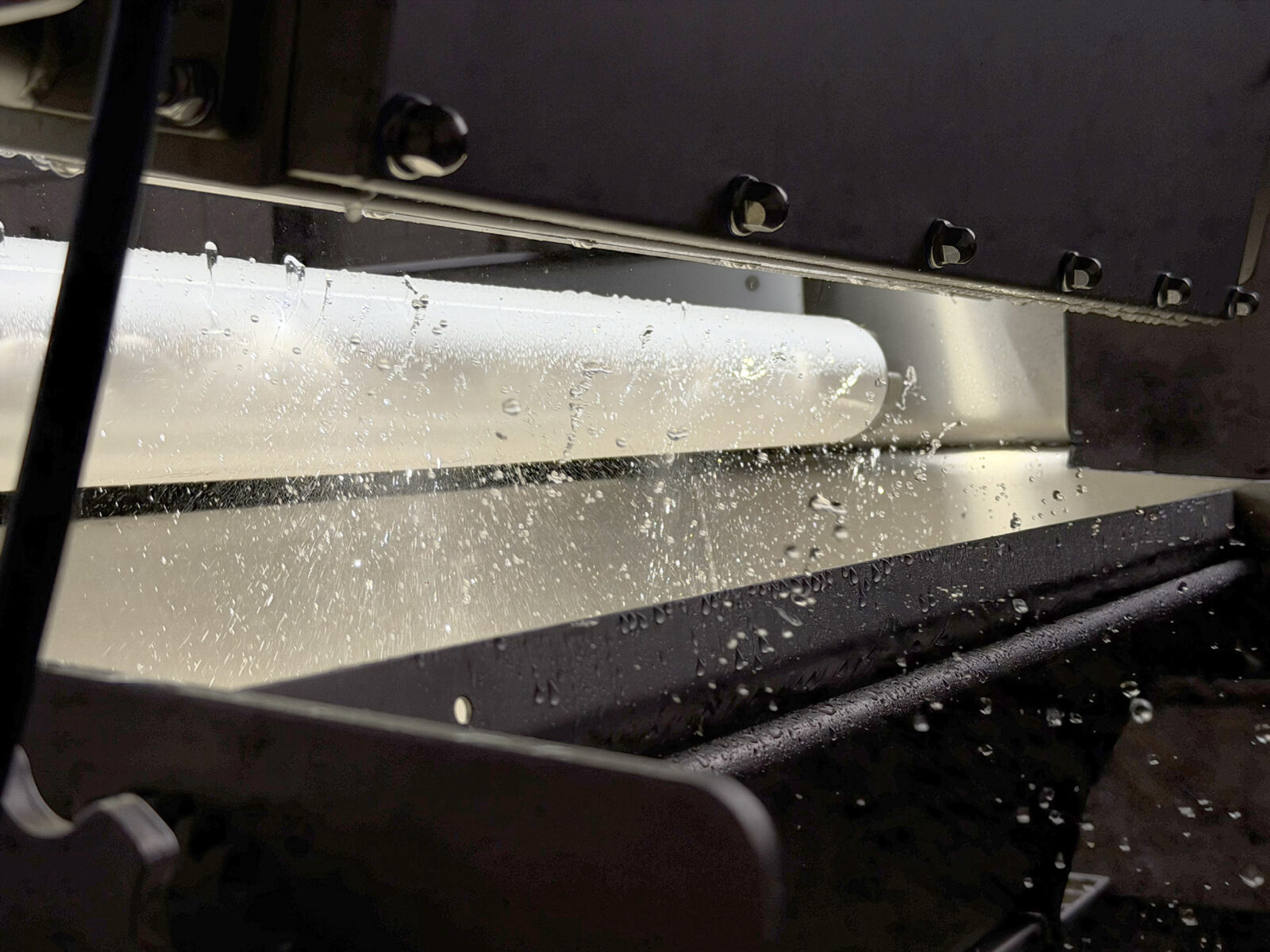
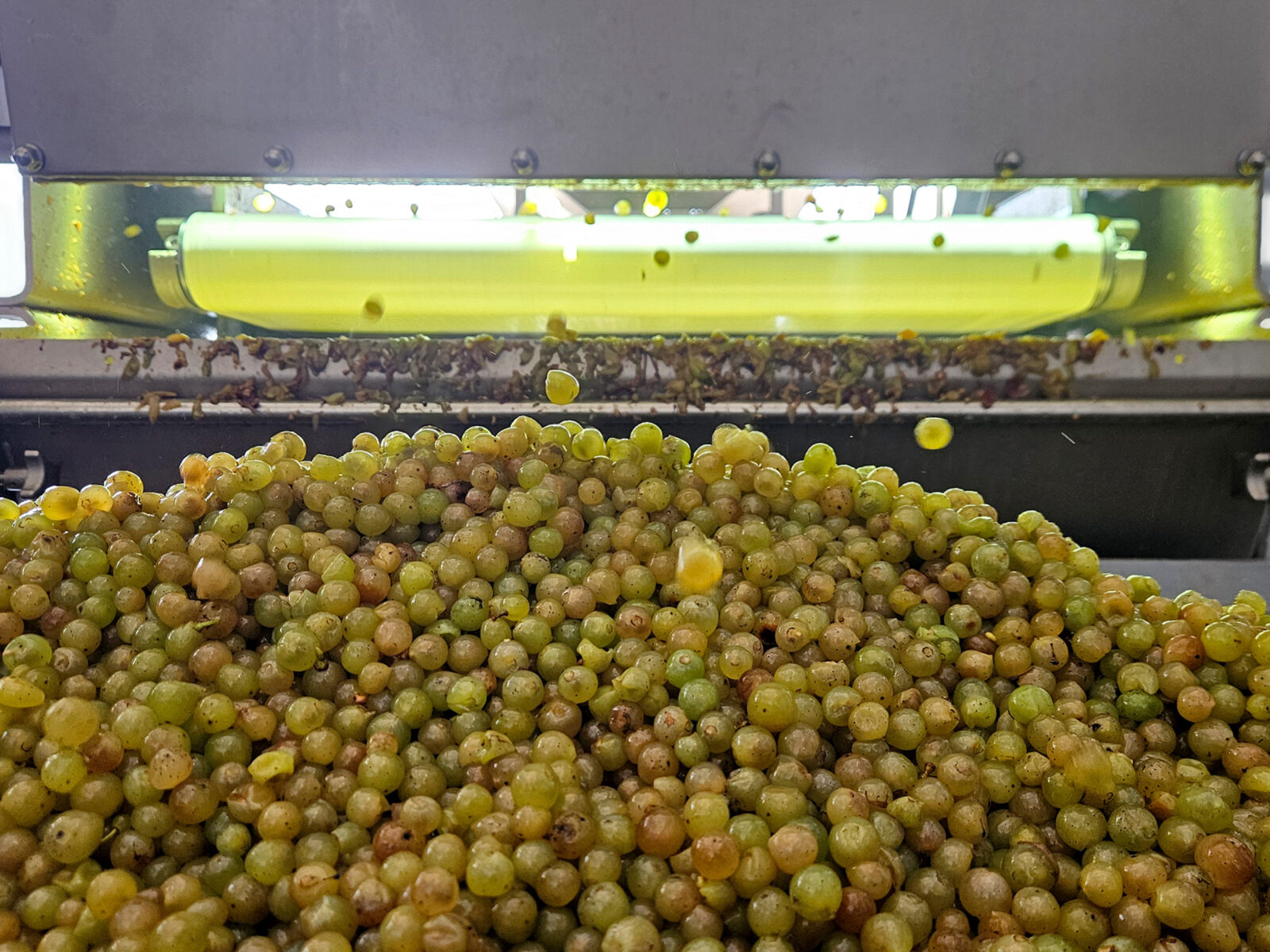
The capture of objects to be sorted takes place in mid-air, preventing any disturbances from the conveyor belt. The detection and targeted ejection of unwanted objects occur at a very short distance between the camera and the ejection zone (~75 mm). 160 individual nozzles ensure precise sorting with minimal air consumption – all without a large compressor system.